

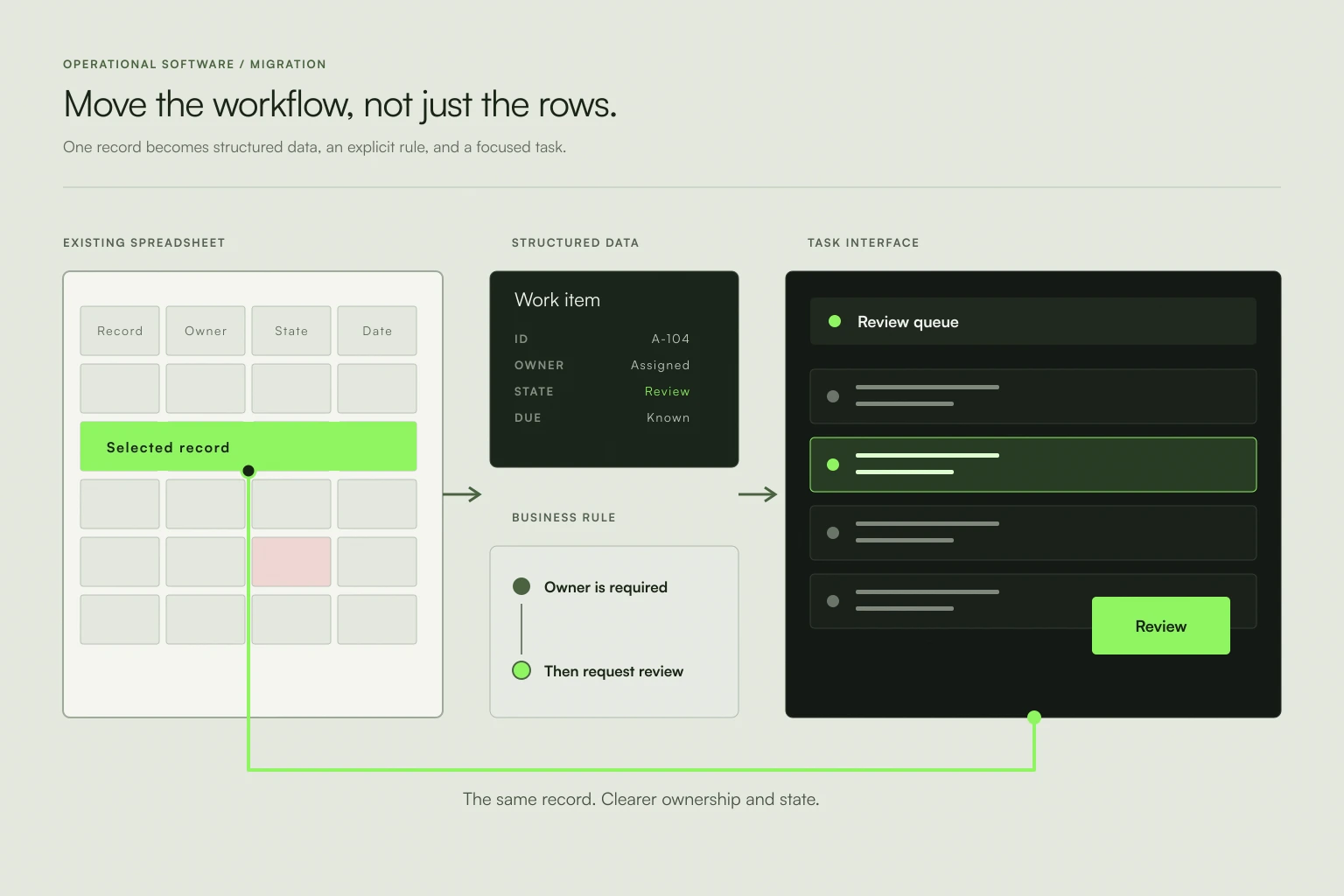
Move the workflow with the record
- Start with the spreadsheet
Choose a real record and identify the job it represents.
- Make the rules explicit
Define the record, its owner, and what makes it ready for review.
- Support the next action
Bring the record into a focused review queue, with clear permissions and state.
Recognize when a sheet becomes a system
Spreadsheets are useful for exploring information and adapting a process quickly. The question changes when the sheet starts coordinating work across people: approvals, assignments, status changes, or customer records that others depend on.
Look at the effort surrounding the sheet. If someone regularly reconciles versions, repairs formulas, or follows up on missed handoffs, you may be maintaining a business system without explicit rules for how it operates.
Look for recurring friction
A single inconvenience rarely justifies a rebuild. Look for repeated problems that affect important work. Record examples so you can distinguish a process issue from a software requirement.
| A spreadsheet can still fit | A dedicated workflow may help |
|---|---|
| One person owns the process and can check the changes. | Several roles need different permissions and an accountable approval trail. |
| The work involves exploration and formulas that change often. | The same rules must be applied consistently to every request. |
| Occasional imports are manageable. | Repeated copying between systems creates delays or conflicting records. |
- The same information is copied between several tools.
- Access needs differ by role, record, or stage of the workflow.
- Important changes are hard to trace or review.
- Work stops when the person who knows the sheet is unavailable.
- Exceptions and corrections depend on instructions outside the system.
Map the decisions before designing the interface
Choose one workflow and follow a real record through it. Identify the person responsible at each step, the information they need, and the decisions they can make. Include what happens when data is missing, an approval is declined, or something needs to be corrected.
This map becomes a basis for the product. Forms support information entry; roles control actions; status changes make progress visible; integrations remove specific manual handoffs. Each feature should support a part of the workflow.
Plan the move with the people doing the work
A replacement needs more than a data import. Decide which records should move, what needs cleaning, and how your team will confirm the result. Keep the original information available according to an agreed retention and access plan.
Introduce the new workflow in a reviewable way. Let the people using it try realistic tasks, identify gaps, and understand where to get help. Set a clear point at which the new system becomes the source used for day-to-day work.
Keep the flexibility that matters
A dedicated tool should make the important workflow dependable without making every small change a development project. Discuss which rules, fields, exports, and templates your team needs to manage themselves.
You may not need to replace every spreadsheet. A focused application can own the operational process while exports and analysis remain in familiar tools. The right boundary follows the work, rather than a desire to remove a particular technology.